
India
Sowa Rigpa retreats in India
Sowa Rigpa retreats in India: the houses that offer it, how long to stay, the best months to go and where a quote starts, per person.
About the tradition
Himalayan medicine, delivered by the state in Bhutan
Tibet and the high Himalaya; the shared ancestor of Ayurveda and Chinese medicine.
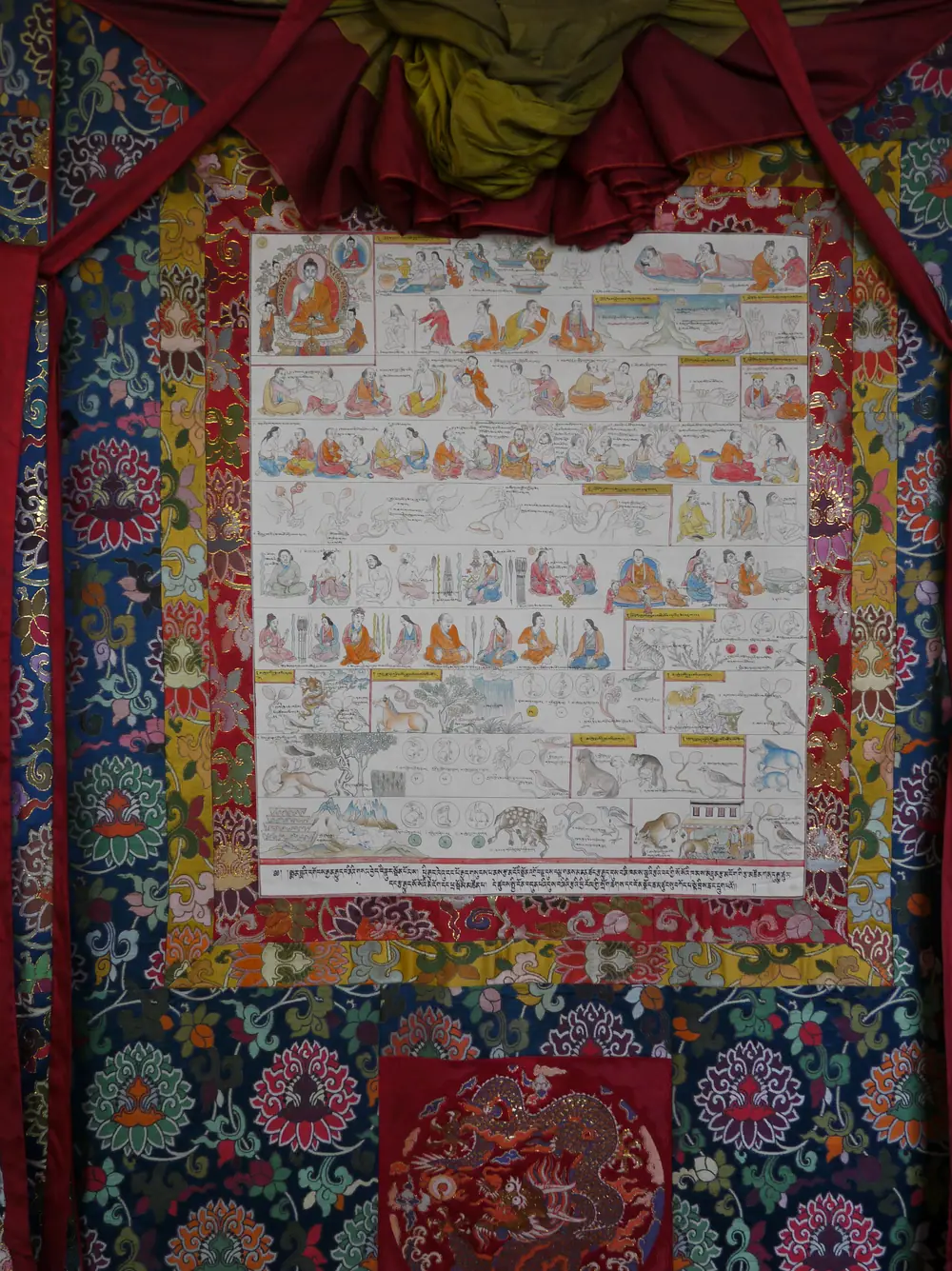
Sowa Rigpa — "the science of healing" — is the Tibetan medical system, and Bhutan is the most interesting place to encounter it because it is one of very few countries where a traditional system is genuinely integrated into the public health service rather than tolerated alongside it. Practitioners train at a national institute, units operate inside government hospitals, and the medicines are manufactured by the state from high-altitude plants.
The system shares its philosophical architecture with Ayurveda — three humours, a constitutional framework, diagnosis by pulse and urine — and diverges through several centuries of Tibetan, Chinese and Greco-Arab contact. Its diagnostic tradition is unusually elaborate: pulse reading at multiple positions and depths, urine analysis conducted at a specified time of day, and a long structured interview.
For a traveller the practical point is that Bhutan offers Sowa Rigpa as medicine rather than as a spa item, and that the country’s tourism policy — a daily levy, no unaccompanied independent travel — makes it an expensive and deliberately low-volume destination. Nobody stumbles into this one.
Facts you can check
- Bhutan operates traditional medicine units within its government hospital system alongside allopathic services.
- Practitioners train at a national institute of traditional medicine in Thimphu; the country manufactures its own traditional medicines domestically.
- India formally recognises Sowa Rigpa as a system of medicine under the Ministry of AYUSH.
- The classical textual foundation is the Gyüshi, the Four Tantras.
- Bhutan levies a Sustainable Development Fee on visitors and requires most international visitors to travel on a booked itinerary.
- Paro is the country’s only international airport, and its approach is flown by a small number of specially certified crews.
Before you book
What the evidence supports, and what it does not
- goodSowa Rigpa is integrated into a national health system
Not a clinical claim but the most useful fact here: a government funds, trains for and dispenses this system. That is a stronger institutional signal than any marketing.
- mixedTibetan herbal formulas help specific conditions
A small number of formulas have been studied — one for peripheral arterial disease has a modest trial literature — but the great majority of the pharmacopoeia has no modern trial evidence at all.
- traditionalPulse and urine diagnosis identify disease reliably
Central to the system, elaborate, and not validated against modern diagnostics. It is how a Sowa Rigpa physician works; it is not a substitute for investigation.
- traditionalHot-stone bathing relieves aches and stiffness
River stones heated in a fire and dropped into artemisia-infused water. Long tradition, no controlled evidence, and immersion in hot water with a strong herbal infusion needs none to be worth doing.
- noneTraditional preparations are free of safety concerns
Some Tibetan formulations historically include processed heavy metals, as in Ayurvedic rasa shastra. Take preparations from the treating institution and declare everything you take at home.
Where to go
1 house, and what each is for

When to come
The season in Rishikesh
| Destination | Jan | Feb | Mar | Apr | May | Jun | Jul | Aug | Sep | Oct | Nov | Dec |
|---|---|---|---|---|---|---|---|---|---|---|---|---|
| RishikeshIndia | Jan: good alternative | Feb: preferred season | Mar: preferred season | Apr: preferred season | May: less suitable | Jun: less suitable | Jul: less suitable | Aug: less suitable | Sep: preferred season | Oct: preferred season | Nov: preferred season | Dec: good alternative |
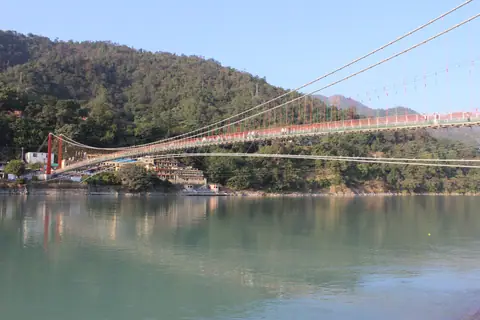
Rishikesh. February to April and late September to November: warm days, cold clear nights, and a river that is green rather than brown and in spate. July and August are landslide season in the hills. May and June are simply too hot for a full practice schedule, and December to January is cold enough that an unheated ashram room becomes a test of commitment.
Asked and answered
Before you ask
Can I get a serious course of treatment as a visitor?
Is the altitude a problem?
Why is Bhutan so expensive?
Should I take the medicines home?
Is a 200-hour certificate from Rishikesh taken seriously?
Can I do a training and a Panchakarma back to back?
Not sure this is the right list?
Tell us what you want from the trip and we will help compare suitable properties, programme styles and travel dates for India or a better-fitting alternative.
Ask Heal & Rest